

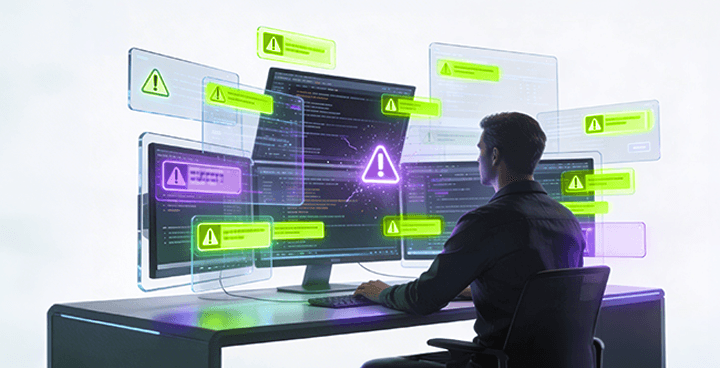
Alert Fatigue: The Silent Threat That Turns Critical Warnings into Background Noise
April 15, 2026
In the world of cybersecurity, alerts are meant to be the first line of defense against potential threats. However, the sheer volume of alerts that security teams receive can lead to a phenomenon known as alert fatigue, where analysts become desensitized to warnings and may miss genuine threats.
see more...

Security Awareness Training: Building a Culture of Cyber Resilience
March 30, 2026
Employees are often the weakest link in an organization's security system because they may forget important information and are vulnerable to fraud. Security awareness training helps employees understand the risks, threats, and vulnerabilities that can be targeted. This training teaches them how to protect the organization's network and data, especially for organizations operating in the IT sector, where employees who use devices are often the target of cyber attacks.
see more...

State of the Art: Architecture, Training, and Engineering of Large Language Models
March 15, 2026
The foundational pillar of modern Large Language Models (LLMs) rests upon the Transformer architecture, a computational paradigm that fundamentally altered natural language processing through the Self-Attention mechanism. Unlike recurrent networks that process data sequentially, Self-Attention allows every token within an input sequence to interact with all other tokens simultaneously. This generates a highly contextualized representation space capable of capturing long-range dependencies without rigid structural boundaries.
see more...

The Invisible Guard: How DMZs Protect the Modern Enterprise
February 25, 2026
Digitalization in the healthcare sector has been growing rapidly alongside the increasing adoption of information technology in healthcare services. The implementation of electronic medical records, online doctor consultation applications, and hospital queue management systems has significantly transformed healthcare delivery, making services more efficient and accessible for patients. However, this digital transformation also introduces new risks, particularly the rising threat to information security. This situation poses a serious challenge for the healthcare sector in the digital era, requiring organizations to establish, implement, and continuously improve information security management systems in a sustainable manner (Ansar, 2024).
see more...
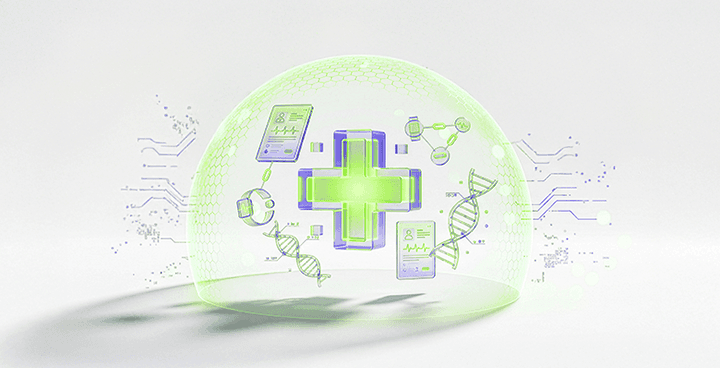
ISO/IEC 27001: A Strategic Investment in Healthcare Security in the Digital Era
February 15, 2026
Digitalization in the healthcare sector has been growing rapidly alongside the increasing adoption of information technology in healthcare services. The implementation of electronic medical records, online doctor consultation applications, and hospital queue management systems has significantly transformed healthcare delivery, making services more efficient and accessible for patients. However, this digital transformation also introduces new risks, particularly the rising threat to information security. This situation poses a serious challenge for the healthcare sector in the digital era, requiring organizations to establish, implement, and continuously improve information security management systems in a sustainable manner (Ansar, 2024).
see more...
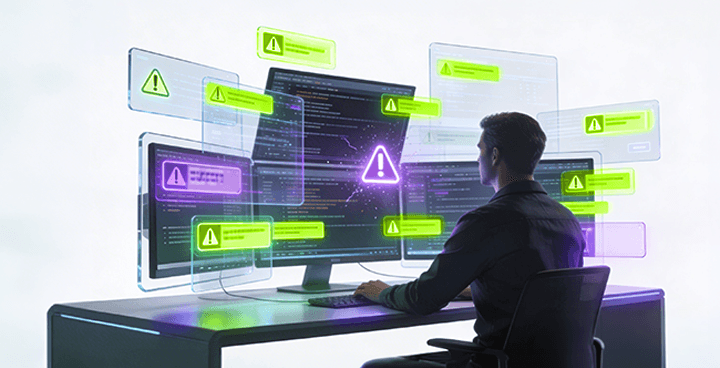
Alert Fatigue: The Silent Threat That Turns Critical Warnings into Background Noise
In the world of cybersecurity, alerts are meant to be the first line of defense against potential threats. However, the sheer volume of alerts that security teams receive can lead to a phenomenon known as alert fatigue, where analysts become desensitized to warnings and may miss genuine threats.
Read More

Security Awareness Training: Building a Culture of Cyber Resilience
Employees are often the weakest link in an organization's security system because they may forget important information and are vulnerable to fraud. Security awareness training helps employees understand the risks, threats, and vulnerabilities that can be targeted. This training teaches them how to protect the organization's network and data, especially for organizations operating in the IT sector, where employees who use devices are often the target of cyber attacks.
Read More

State of the Art: Architecture, Training, and Engineering of Large Language Models
The foundational pillar of modern Large Language Models (LLMs) rests upon the Transformer architecture, a computational paradigm that fundamentally altered natural language processing through the Self-Attention mechanism. Unlike recurrent networks that process data sequentially, Self-Attention allows every token within an input sequence to interact with all other tokens simultaneously. This generates a highly contextualized representation space capable of capturing long-range dependencies without rigid structural boundaries.
Read More

The Invisible Guard: How DMZs Protect the Modern Enterprise
Digitalization in the healthcare sector has been growing rapidly alongside the increasing adoption of information technology in healthcare services. The implementation of electronic medical records, online doctor consultation applications, and hospital queue management systems has significantly transformed healthcare delivery, making services more efficient and accessible for patients. However, this digital transformation also introduces new risks, particularly the rising threat to information security. This situation poses a serious challenge for the healthcare sector in the digital era, requiring organizations to establish, implement, and continuously improve information security management systems in a sustainable manner (Ansar, 2024).
Read More
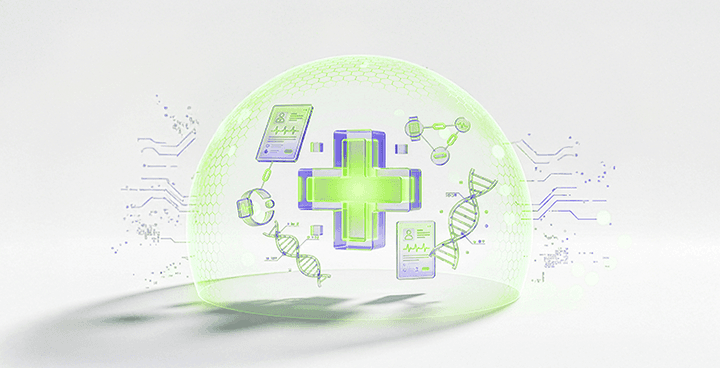
ISO/IEC 27001: A Strategic Investment in Healthcare Security in the Digital Era
Digitalization in the healthcare sector has been growing rapidly alongside the increasing adoption of information technology in healthcare services. The implementation of electronic medical records, online doctor consultation applications, and hospital queue management systems has significantly transformed healthcare delivery, making services more efficient and accessible for patients. However, this digital transformation also introduces new risks, particularly the rising threat to information security. This situation poses a serious challenge for the healthcare sector in the digital era, requiring organizations to establish, implement, and continuously improve information security management systems in a sustainable manner (Ansar, 2024).
Read More
Large Language Model Vulnerabilities
With the integration of Large Language Models (LLMs) being commonplace in the workflows of enterprises across the globe, it is imperative that their vulnerabilities be known. Although developers use “System Prompts” to set behavioral guidelines for these models to safeguard confidential information, these directions are not foolproof.
Read More


© 2025 Tjakrabirawa Teknologi Indonesia. All Rights Reserved.