
Post-Quantum Encryption: Preparing Your Organization for Quantum-Era Cybersecurity Threats

Aldova
Jan 12, 2026
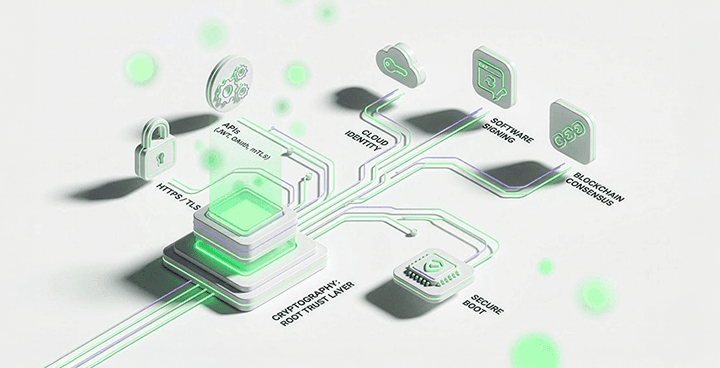
Table of contents
What is Cryptography in Modern Security Systems?
What is Post-Quantum Cryptography (PQC)?
Why Quantum Computing is a Real Cryptographic Threat?
Background: Mathematical Foundations of Current Encryption
Quantum Algorithms and Cryptographic Collapse
The “Harvest Now, Decrypt Later” Threat Model
Post-Quantum Cryptography Algorithm Families
Security Trade-offs and Performance Considerations
Migration Strategy for Enterprise
Common Misconceptions About PQC
Conclusion
Tags:
What is Cryptography in Modern Security Systems?
From a cybersecurity perspective, cryptography is not just encryption. It is the root trust layer of nearly all modern digital systems.
Cryptography secures :
TLS/HTTPS traffic
API authentication (JWT, OAuth, mTLS)
Software update signing
Cloud identity systems
Blockchain consensus
Password storage
Secure boot & firmware integrity
If cryptography fails, all higher-layer security controls fail with it, including firewalls, IAM, and zero-trust architectures.
What is Post-Quantum Cryptography (PQC)?
Post-Quantum Cryptography (PQC) refers to cryptographic algorithms that remain secure even if the attacker has access to a large-scale quantum computer.
Important clarification from a security standpoint:
PQC does not require quantum hardware
PQC runs on classical CPUs
PQC is a defensive response to future attacker capabilities
The goal is cryptographic longevity: data encrypted today must remain secure for decades.
Why Quantum Computing is a Real Cryptographic Threat?
Security professionals do not worry about quantum computing because it is hypothetical.
We worry because:
Nation-states are funding quantum research heavily
Cryptographic migration historically takes 10–20 years
Encrypted data has long-term value
Security is about anticipating attacker capability, not reacting to it.
Background: Mathematical Foundations of Current Encryption
Public-Key Cryptography Today
Most asymmetric cryptography relies on problems that are:
Hard for classical computers
Easy to verify
Assumed to be one-way functions
Examples :
| Algorithm | Mathematical Problem |
|---|---|
“RSA” | Integer factorization |
“ECC” | Elliptic curve discrete logarithm |
“DH” | Discrete logarithm |
These assumptions collapse in the presence of quantum algorithms.
Quantum Algorithms and Cryptographic Collapse
Shor’s Algorithm (Critical Threat)
Shor’s algorithm allows a quantum computer to:
Factor large integers efficiently
Solve discrete logarithms efficiently
Impact :
RSA → Broken
ECC → Broken
ECDSA → Broken
Diffie-Hellman → Broken
This is not a “weakened” scenario. This is a complete cryptographic failure.
Grover’s Algorithm (Moderate Threat)
Grover’s algorithm reduces brute-force search complexity from:
This affects:
Symmetric encryption
Hash functions
Mitigation:
AES-256 instead of AES-128
SHA-384 instead of SHA-256
The “Harvest Now, Decrypt Later” Threat Model
This is the most dangerous and misunderstood quantum threat.
How it works:
Attacker captures encrypted traffic today
Stores it indefinitely
Decrypts it once quantum capability exists
Why This Matters
Medical records
Government communications
Trade secrets
Legal documents
Source code
From a cybersecurity risk perspective, encryption expiration dates matter.
Post-Quantum Cryptography Algorithm Families
After years of global cryptanalysis, NIST selected several PQC algorithms.
Key Algorithm Classes :
Lattice-Based Cryptography
CRYSTALS-Kyber
CRYSTALS-Dilithium
Security based on:
Learning With Errors (LWE)
Module-LWE problems
These problems currently have no known efficient quantum attacks.
Hash-Based Cryptography
SPHINCS+
Advantages:
Extremely conservative security assumptions
Disadvantages:
Large signature sizes
Slower performance
Code-Based Cryptography
McEliece (not standardized yet)
Extremely strong but impractical due to massive key sizes.
Security Trade-offs and Performance Considerations
From an operational security standpoint, PQC introduces trade-offs:
| Aspect | Impact |
|---|---|
“Key size” | Larger |
“CPU usage” | Higher |
“Network overhead” | Increased |
“Latency” | Slightly higher |
“Memory” | Increased |
However, performance is not a security argument when confidentiality requirements span decades.
Migration Strategy for Enterprise
A realistic, security-first migration strategy includes:
Phase 1 – Crypto Inventory
Identify all cryptographic dependencies
TLS, JWT, PKI, VPN, SSH, code signing
Phase 2 – Hybrid Cryptography
Classical + PQC algorithms combined
Safe fallback if PQC breaks
Phase 3 – Policy & Governance
Crypto agility
Certificate lifecycle updates
Vendor compliance checks
Security teams must treat PQC as risk management, not optional optimization.
Common Misconceptions About PQC
Misconception 1: “Quantum computers don’t exist yet”
Reality: Attackers already collect encrypted data.
Misconception 2: “Only governments need PQC”
Reality: Enterprises hold intellectual property worth billions.
Misconception 3: “We can switch algorithms later”
Reality: Cryptographic migration is slow, complex, and fragile.
Misconception 4: “PQC is experimental”
Reality: NIST-standardized algorithms are production-ready.
Conclusion

From a cybersecurity expert’s perspective, Post-Quantum Cryptography is not optional, not speculative, and not hype-driven.
It is a response to:
Predictable attacker evolution
Long-term data sensitivity
Historical lessons of cryptographic collapse
Organizations that delay PQC adoption are not saving cost — they are accumulating invisible technical debt with catastrophic risk.
Quantum computing will not announce itself politely. When cryptography breaks, it breaks everywhere at once.
References
“NIST - Post-Quantum Cryptography Project https://csrc.nist.gov/projects/post-quantum-cryptography
“NIST - First Quantum-Resistant Cryptographic Algorithm Selection (2022)” https://www.nist.gov/news-events/news/2022/07/nist-announces-first-four-quantum-resistant-cryptographic
“Peter W. Shor (1994) - Algorithms for Quantum Computation” https://arxiv.org/abs/quant-ph/9508027
“ENISA - Post-Quantum Cryptography: Current State and Quantum Mitigation” https://www.enisa.europa.eu/publications/post-quantum-cryptography-current-state-and-quantum-mitigation
“Cloudflare Research - Post-Quantum Cryptography for All” https://blog.cloudflare.com/post-quantum-for-all/
Continue Reading

State of the Art: Architecture, Training, and Engineering of Large Language Models
The foundational pillar of modern Large Language Models (LLMs) rests upon the Transformer architecture, a computational paradigm that fundamentally altered natural language processing through the Self-Attention mechanism. Unlike recurrent networks that process data sequentially, Self-Attention allows every token within an input sequence to interact with all other tokens simultaneously. This generates a highly contextualized representation space capable of capturing long-range dependencies without rigid structural boundaries.
Read More
The Invisible Guard: How DMZs Protect the Modern Enterprise
Digitalization in the healthcare sector has been growing rapidly alongside the increasing adoption of information technology in healthcare services. The implementation of electronic medical records, online doctor consultation applications, and hospital queue management systems has significantly transformed healthcare delivery, making services more efficient and accessible for patients. However, this digital transformation also introduces new risks, particularly the rising threat to information security. This situation poses a serious challenge for the healthcare sector in the digital era, requiring organizations to establish, implement, and continuously improve information security management systems in a sustainable manner (Ansar, 2024).
Read More

ISO/IEC 27001: A Strategic Investment in Healthcare Security in the Digital Era
Digitalization in the healthcare sector has been growing rapidly alongside the increasing adoption of information technology in healthcare services. The implementation of electronic medical records, online doctor consultation applications, and hospital queue management systems has significantly transformed healthcare delivery, making services more efficient and accessible for patients. However, this digital transformation also introduces new risks, particularly the rising threat to information security. This situation poses a serious challenge for the healthcare sector in the digital era, requiring organizations to establish, implement, and continuously improve information security management systems in a sustainable manner (Ansar, 2024).
Read More

Large Language Model Vulnerabilities
With the integration of Large Language Models (LLMs) being commonplace in the workflows of enterprises across the globe, it is imperative that their vulnerabilities be known. Although developers use “System Prompts” to set behavioral guidelines for these models to safeguard confidential information, these directions are not foolproof.
Read More
Post-Quantum Encryption: Preparing Your Organization for Quantum-Era Cybersecurity Threats
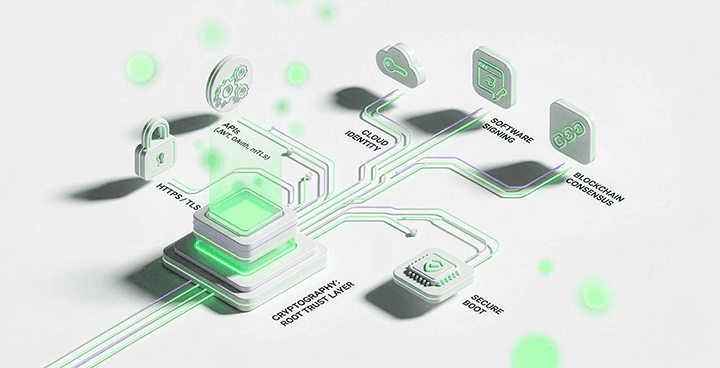
From a cybersecurity perspective, cryptography is not just encryption. It is the root trust layer of nearly all modern digital systems.
Read More
Critical Security Vulnerability On React.js (CVE-2025-55182) and Next.js framework (CVE-2025-66478)
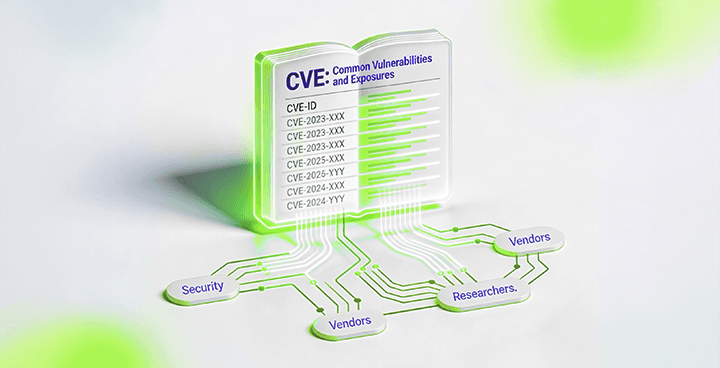
CVE stands for Common Vulnerabilities and Exposures. It is an international, community-based list or dictionary of publicly known cybersecurity vulnerabilities in software and firmware. The primary goal of the CVE program is to provide a standardized naming convention (CVE Identifiers or CVE IDs) for these flaws, which allows security professionals, vendors, and researchers to communicate and share information about specific threats using a common language.
Read More


© 2025 Tjakrabirawa Teknologi Indonesia. All Rights Reserved.