
DevSecOps Threat Modelling Implementation on Simple Web Application

Arjan Ridwan
Dec 17, 2025
Table of contents
Executive Summary
Requirements
Threat Modeling Approach & Framework
Design & Prototype
Testing & Implementation
Conclusion & Lesson Learned
References
Tags:
Executive Summary
When designing software or applications, an assessment needs to be carried out to find out what threats may arise. One way is to do threat modeling. Threat modeling is a proactive process of looking for threats in a software or application. When creating software or application models, we usually use two types of models, the model of what will be built, and the model of any threats that may arise.[1]
Requirements
The security goal of this exercise:
Determine the appropriate threat modeling approach and method to do threat modeling before the implementation of DevSecOps.
Can identify threats early and carry out mitigation to reduce the consequences of these threats.
Below are the requirements needed to implement threat modeling using STRIDE:
Information relating to applications, services, and topologies used
Approach method
Framework
Threat modeling tool
Data flow diagram
Threat Modeling Approach & Framework
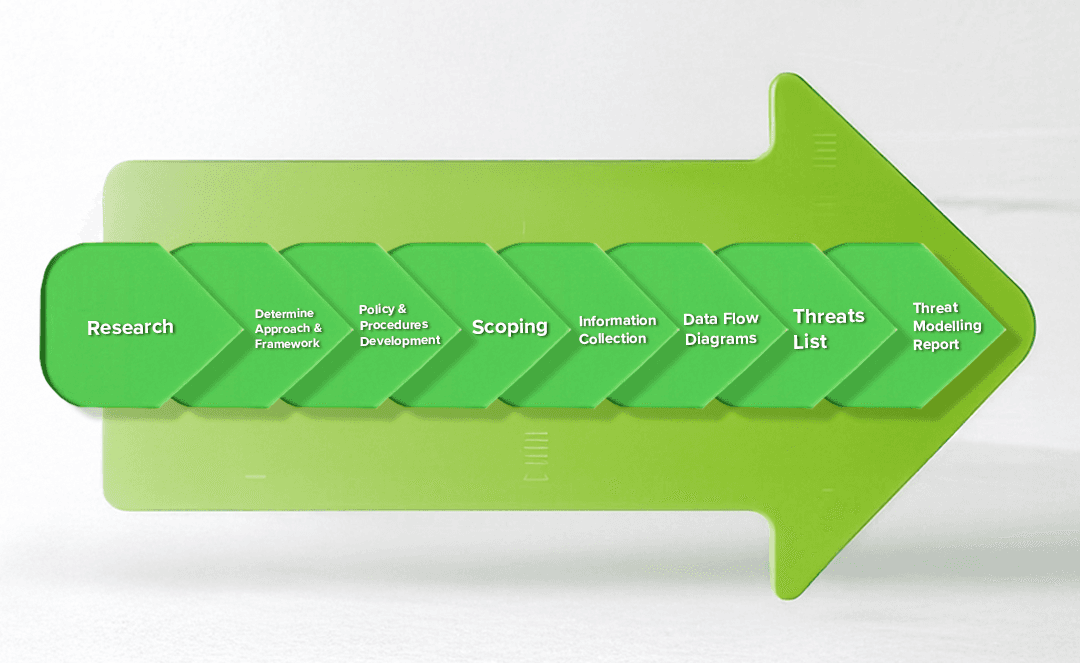
Research
In carrying out threat modeling, three approaches can be used according to OWASP as follows:
Application-centric approach: visualizing the application.
Asset-centric approach: identified by the list of assets.
Attacker-centric approach: using attacker perspective.
After researching several of these approaches, I chose an application-centric approach by considering the data that can be taken as a reference for threat modeling.
Next, determine the framework that can be used with an application-centric approach. I researched several frameworks available for threat modeling. The following are some of the currently available frameworks for threat modeling:
1.
LINDDUN
2.
Attack Trees
3.
TRIKE
4.
STRIDE
5.
VAST Modeling
6.
PASTA
7.
Persona non-Grata
8.
Quantitative TMM
9.
hTMM
10.
CVSS
11.
OCTAVE
12.
Security Cards
Next, I mapped the framework based on the approach, and the following results were obtained:
Asset-centric: STRIDE, LINDDUN, Security Cards, Quantitative TMM, VAST Modeling, OCTAVE, PASTA.
Attacker-centric: PASTA, Persona non-Grata, hTMM, TRIKE, Attack Trees.
Application-centric: STRIDE, CVSS, Attack Trees, Security Cards, VAST Modelling, OCTAVE.
The following are the results of comparative research from several of the frameworks above.
| Methods | Pros | Cons |
|---|---|---|
STRIDE |
|
|
PASTA |
|
|
LINDDUN |
|
|
CVSS |
|
|
Attack Trees |
|
|
Persona non-Grata |
|
|
Security Cards |
|
|
hTMM |
|
|
Quantitative TMM |
|
|
TRIKE |
|
|
VAST Modeling |
|
|
OCTAVE |
|
|
In determining the approach and method, the following are the criteria I determined for making the selection:
Easy to use
Using data/information that is easier to obtain
Can use tools
One of the mature frameworks
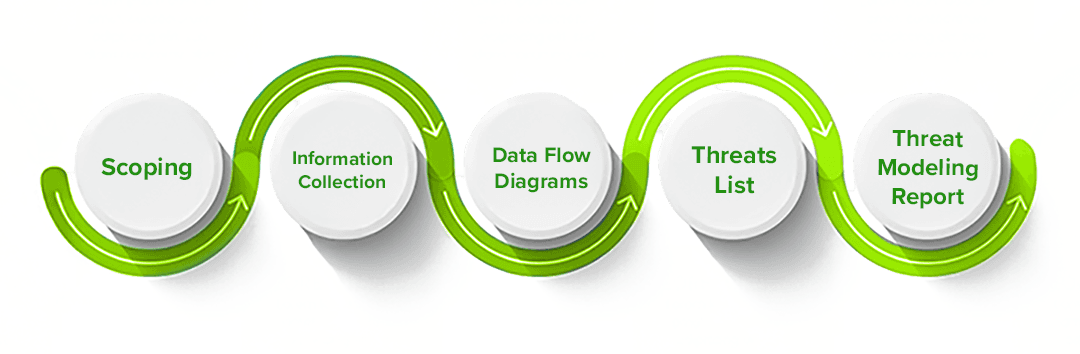
Based on the criteria above and the results of comparative research on several approaches and frameworks, the application-centric approach using the STRIDE framework was selected which meets all the specified criteria. Below is a threat modeling framework using STRIDE.
Design & Prototype
This is the design for doing threat modeling.
1.
Conducted research into several threat modeling approaches and processes.
2.
Determining the threat modeling approach and method based on research results to determine which is suitable.
3.
Determining the scope for threat modeling in the internal environment.
4.
Information collection for the selected scope environment.
5.
Creation of Data Flow Diagrams.
6.
List identified threats using STRIDE methodology and Microsoft Threat Modeling Tools.
Testing & Implementation
Scoping
The following are the testing conditions and implementation of this exercise with the scope of a simple “Web Application” environment for the DevSecOps threat modeling exercise.
Information Collection
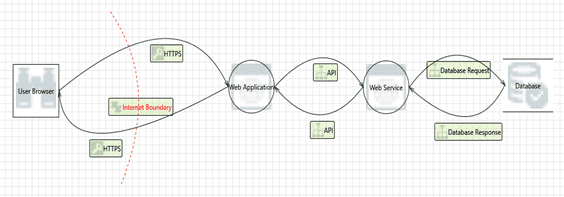
Below is an example of simple web application architecture topology.
a.
Architecture topology.

b.
List of Applications/Service
User browser (Chrome, Mozilla, Edge, etc.)
HTTPS
Web applications
API
Web service
Database server
Data Flow Diagrams
The first step is to create a Data Flow Diagram (DFD). DFDs play a fundamental role in threat modeling by providing a clear visual representation of how data moves through a system. Their primary function is to help analysts and security teams identify potential threats and security vulnerabilities within an application's architecture.
Threat Model Summary
Total Threats: 31
Threats List
After creating the DFD, we identify potential threats to each element using a structured approach with the STRIDE method.
In the table created, we can enter information such as Threat, Category, Description, and Priority.
Threat: Contains the types of attacks that can be used by attackers according to the elements used.
Category: Attack categories based on STRIDE elements (Spoofing, Tampering, Repudiation, Information Disclosure, Denial of Service, Elevation of Privilege).
Description: Detailed explanation regarding attack activity.
Priority: Priority in carrying out repairs is based on the severity level of the risk value of each type of attack. Determining the risk value can be calculated using the CVSS (Common Vulnerable Scoring System) calculator independently, referring to companies that have already carried out calculations, or from CVEs that have been publicly released.
a.
API (Web App - Web Service)
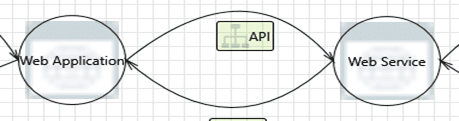
No Threat Category Description Priority 1
Web Application Process Memory Tampered
Tampering
Web applications can tamper with web services if given memory access.
Critical
2
Replay Attacks
Tampering
Packets without sequence numbers can be intercepted and retried in other ways.
Medium
3
Collision Attacks
Tampering
Attackers can overlap data by sending a series of packets.
Medium
4
Weak Authentication Scheme
Information Disclosure
Vulnerable to common weaknesses in authentication
High
5
Elevation Using Impersonation
Elevation of Privilege
Web services can seek additional privileges by imitating the context of a web application
High
b.
API (Web Service - Web App)
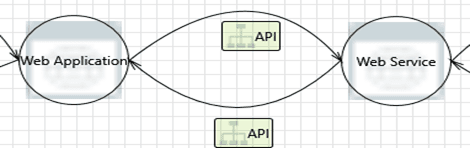
No Threat Category Description Priority 1
Web Service Process Memory Tampered
Tampering
Web service can tamper with web applications if given memory access.
Critical
2
Cross-Site Scripting (XSS)
Tampering
If the input is not properly sanitized, web applications can be subject to XSS attacks.
High
3
Elevation Using Impersonation
Elevation of Privilege
Web services can seek additional privileges by imitating the context of a web application
High
c.
Database Request
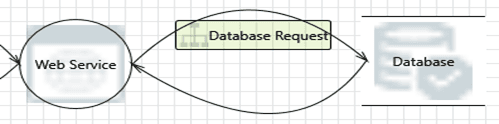
No Threat Category Description Priority 1
Spoofing of Destination Data Store Database
Spoofing
An attacker can spoof the database which can cause data to be written to the target.
High
2
Potential SQL Injection Vulnerability for Database
Tampering
SQL injection is a type of cyber-attack that targets web applications by exploiting vulnerabilities in their SQL database interactions
High
3
Potential Excessive Resource Consumption for Web Service or Database
Denial of Service
Attacks that use resource consumption are possible when the web or database controls resources by taking explicit steps.
Medium
4
Weak Credential Storage
Information Disclosure
Credentials on the server can be exposed, and credentials on the client can be stolen.
High
5
Risks from Logging
Tampering
Log files can be used to attack the log readers
Medium
6
Lower Trusted Subject Updates Logs
Repudiation
Too many people writing logs can be a problem in repudiation.
Medium
7
Data Logs from an Unknown Source
Repudiation
Logs from unknown external users must be identified
Medium
8
Insufficient Auditing
Repudiation
Log data that is not captured properly will complicate the audit process.
Medium
9
Potential Weak Protections for Audit Data
Repudiation
Attacks on audit mechanisms such as log deletion may occur.
High
d.
Database Response
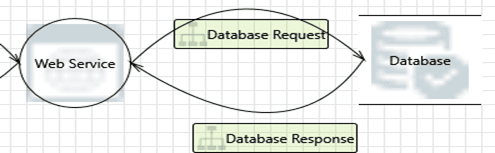
No Threat Category Description Priority 1
Spoofing of Source Data Store Database
Spoofing
An attacker can spoof the database which can cause data to be written to the target.
High
2
Weak Access Control for a Resource
Information Disclosure
Confidential information may be read by attackers if database protection is not performed properly.
High
3
Risks from Logging
Tampering
Log files can be used to attack the log readers
Medium
e.
HTTPS (Browser - Web App)
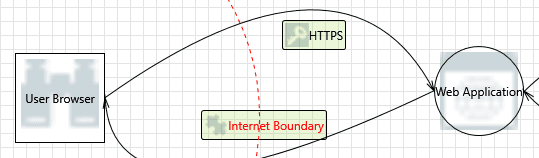
No Threat Category Description Priority 1
Cross-Site Scripting
Tampering
If the input is not properly sanitized, web applications can be subject to XSS attacks.
High
2
Elevation Using Impersonation
Elevation of Privilege
Web applications can seek additional privileges by imitating the context of the user’s browser
High
3
Potential Data Repudiation by Web Application
Repudiation
Web applications do not accept data from outside sources that are not trusted but this can happen without being noticed
Medium
4
Potential Process Crash or Stop for Web Application
Denial of Service
Web applications can experience several obstacles.
Medium
5
Data Flow HTTPS Is Potentially Interrupted
Denial of Service
External agents can disrupt data flow.
High
6
Web Application May be Subject to Elevation of Privilege Using Remote Code Execution
Elevation of Privilege
User browsers can be exploited using remote code execution exploits from web applications
Critical
7
Elevation by Changing the Execution Flow in Web Application
Elevation of Privilege
Data to a web application can be passed by an attacker to change the program flow.
High
8
Cross-Site Request Forgery
Elevation of Privilege
CSRF is a type of cyber-attack where an attacker tricks a user into performing actions on a web application without their consent or knowledge
Medium
f.
HTTPS (Web App - Browser)
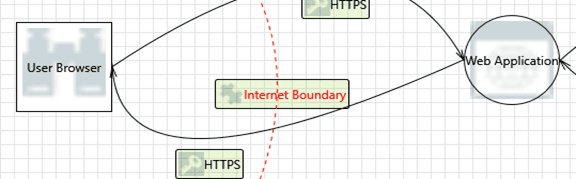
No Threat Category Description Priority 1
Spoofing of the User Browser External Destination Entity
Spoofing
An attacker can spoof a user's browser to send data to the attacker.
Medium
2
External Entity User Browser Potentially Denies Receiving Data
Repudiation
User browsers do not accept data from outside sources that are not trusted but this can happen without being noticed
Low
3
Data Flow HTTPS Is Potentially Interrupted
Denial of Service
External agents can disrupt data flow.
High
Conclusion & Lesson Learned
From the implementation of threat modeling for simple web applications, 31 threats were identified. All these threats still need to be validated later, to see which threats have been mitigated, and which ones have not.
The following are the advantages that I can take from doing threat modeling.
1.
Early detection of security flaws
2.
Improved understanding of the system
3.
Enhanced risk management
4.
Compliance and standards adherence
5.
Informed decision-making
6.
Enhanced communication and collaboration
7.
Improved security posture
8.
Increased confidence in doing business
9.
Continual improvement
10.
Reduced incident response costs
In summary, threat modeling is a strategic process that not only helps in identifying and mitigating security risks early but also improves overall system understanding, promotes better communication, ensures compliance, and enhances the security posture of an organization.
References
[1]
“Adam Shostack - Threat Modeling_ Designing for Security-Wiley (2014)”.
[2]
“OWASP DevSecOps Guideline - v-0.2 | OWASP Foundation.” Accessed: Apr. 08, 2024. [Online]. Available: https://owasp.org/www-project-devsecops-guideline/latest/00b-Threat-modeling
[3]
L. Obiora Nweke and S. D. Wolthusen, “A Review of Asset-Centric Threat Modelling Approaches,” 2020. [Online]. Available: www.ijacsa.thesai.org
[4]
M. J. Coles, “Izar Tarandach & Threat Modeling A Practical Guide for Development Teams.”
Continue Reading
DevSecOps Threat Modelling Implementation on Simple Web Application
When designing software or applications, an assessment needs to be carried out to find out what threats may arise. One way is to do threat modeling. Threat modeling is a proactive process of looking for threats in a software or application.
Read More

Earth Lamia: Ancaman Siber Teranyar yang Mengincar Indonesia
Peta cyber threat Asia Tenggara kini makin menarik dengan kemunculan Earth Lamia, kelompok hacker global berafiliasi Tiongkok, yang aktif menyerang Indonesia.
Read More

Indonesia Naik Daun di Dunia DDoS! Apa Bahayanya dan Solusinya?
Siapa sangka? Indonesia kini tercatat sebagai salah satu sumber serangan DDoS (Distributed Denial of Service) terbesar di dunia selama dua kuartal terakhir! Jika dulu DDoS hanya dibahas dipanggung global, kali ini Indonesia benar-benar jadi sorotan. Mari kita bijak mengupas apa, mengapa, dan dampaknya bagi bisnis serta masyarakat digital.
Read More

Ransomware Mengguncang Pusat Data Nasional, Indonesia Tolak Tegas Tuntutan!
Pernahkah Anda membayangkan data krusial negara kita disandera? Itulah yang menimpa Pusat Data Nasional (PDN) beberapa bulan lalu, tepatnya pertengahan 2025. Peretas berhasil menembus sistem inti PDN dan menuntut tebusan senilai USD 8 juta, atau sekitar 120 miliar rupiah! Namun, pemerintah mengambil langkah tegas dengan menolak membayar. Sebuah sikap yang patut diapresiasi.
Read More
Earth Lamia: Ancaman Siber Teranyar yang Mengincar Indonesia
Peta cyber threat Asia Tenggara kini makin menarik dengan kemunculan Earth Lamia, kelompok hacker global berafiliasi Tiongkok, yang aktif menyerang Indonesia.
Read More
Indonesia Naik Daun di Dunia DDoS! Apa Bahayanya dan Solusinya?
Siapa sangka? Indonesia kini tercatat sebagai salah satu sumber serangan DDoS (Distributed Denial of Service) terbesar di dunia selama dua kuartal terakhir! Jika dulu DDoS hanya dibahas dipanggung global, kali ini Indonesia benar-benar jadi sorotan. Mari kita bijak mengupas apa, mengapa, dan dampaknya bagi bisnis serta masyarakat digital.
Read More


© 2025 Tjakrabirawa Teknologi Indonesia. All Rights Reserved.